
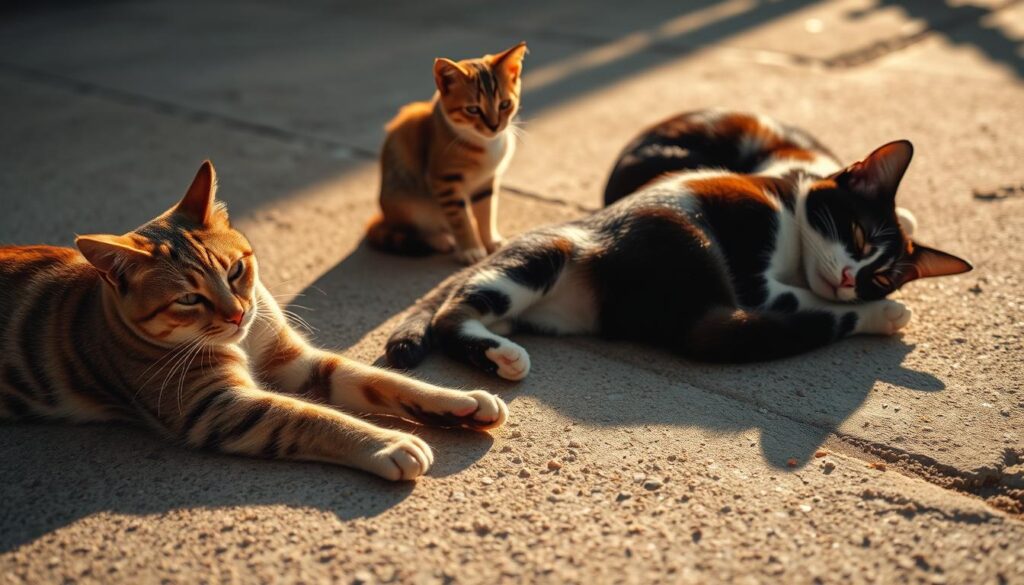
As a cat lover, I’ve seen a trend on TikTok that caught my eye. Many cat owners are getting concrete slabs for their pets. This has started a big debate about why feline friends like concrete.
I looked into this trend and found out that domestic cats and kittens really like concrete. It’s not just about the look; there’s something special about it.
This article will explore why cats are drawn to concrete. We’ll look at different cat breeds and what they prefer.
Key Takeaways
- Cats are attracted to concrete surfaces for various reasons.
- The texture and temperature of concrete may play a role.
- Different cat breeds exhibit unique preferences.
- Understanding this behavior can help cat owners.
- The trend has sparked a community on social media.
The Curious Behavior of Felines and Concrete Surfaces
Cats have always fascinated us with their peculiar behavior. One such habit is their love for concrete surfaces. As a cat owner, I’ve seen my feline friend looking for concrete in our home and yard.
Observing the Phenomenon
Dr. Annie Valuska, a scientist at Purina, says cats like concrete for its novelty and texture. This helps us understand cat behavior and why they’re drawn to concrete.
Common Scenarios Where Cats Seek Concrete
Domestic cats often look for concrete in different places. Here are two common scenarios:
Driveways and Patios
Outdoor areas like driveways and patios offer cats a unique feel and temperature. I’ve seen my cat spend hours on our patio.
Basements and Garages
Indoor concrete spots like basements and garages are cool for cats to lie on, especially when it’s hot. The feline attraction to these spots is clear.
Cats and Their Attraction to Hard Surfaces
Cats have a special liking for hard surfaces. This is due to several reasons. My cat prefers concrete over softer surfaces.
Evolutionary Preferences
Cats’ love for hard surfaces comes from their evolutionary history. In the wild, they use hard surfaces to keep their nails sharp. This helps them feel stable. Domesticated cats still show this preference.
My cat’s behavior shows this is true. They often scratch and rub against hard surfaces.
Comparison to Other Surfaces
Cats prefer concrete over carpet or grass. They like the texture and feel of concrete. It’s stable and durable for them to scratch and rub against.
Concrete vs. Carpet
Carpet is soft and uneven, unlike concrete. Concrete is firm and consistent. My cat prefers lying on concrete over carpet.
Concrete vs. Grass
Grass is natural but uneven. Concrete is solid and reliable. My cat likes the concrete patio better than the grassy lawn.
The Temperature Factor: Cooling and Heating Properties
As a cat owner, I’ve noticed my feline friend likes concrete surfaces. It’s clear that temperature is key in this preference. Concrete helps cats regulate their body temperature.
How Concrete Regulates Temperature
Concrete can absorb and release heat, making it appealing to cats. In summer, it cools them down. In winter, it keeps them warm. This is important for cat health, helping them stay comfortable.
Seasonal Preferences of Cats
Cats have different preferences based on the season and concrete’s temperature. In summer, they cool off on concrete. In winter, they warm up on it.
Summer Cooling Behaviors
In summer, cats cool down by finding shaded spots or lying on cool surfaces like concrete. This helps them avoid overheating.
Winter Warming Patterns
In winter, cats seek out sunny spots or warm surfaces like concrete. This helps them stay warm and comfortable.
Texture and Sensation: The Tactile Appeal
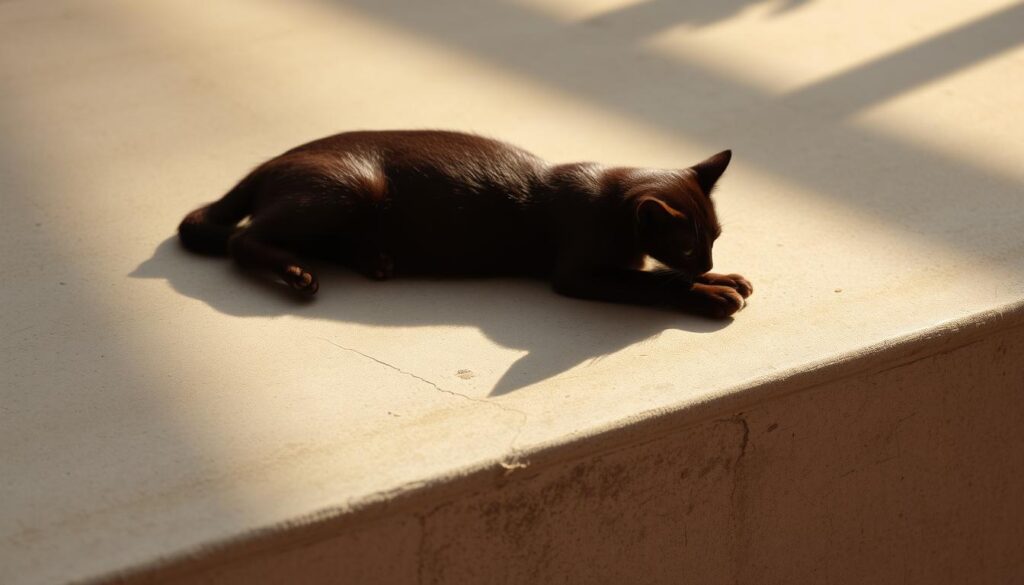
Cats find concrete appealing because of its texture. They touch their world in a special way. Concrete feels different under their paws.
Concrete’s Unique Feel Under Paws
Cats like the rough but strong feel of concrete. It’s different from soft carpets or grass. They find it a fun way to explore.
Scratching and Stretching Behaviors
Scratching and stretching are key for cats. They keep their nails sharp and muscles strong. Concrete is perfect for this because it’s tough.
Knowing about cat behavior shows how important texture is. It affects their happiness and health. As a cat owner, it helps us make sure they have the right places to scratch and stretch.
The Chemical Attraction: Minerals in Concrete
The attraction between cats and concrete is complex. It involves the makeup of concrete. This is why we need to look closer at what makes concrete appealing to cats.
Composition of Concrete and Cat Attraction
Concrete is made from different minerals and substances. It includes cement, water, and aggregate. Minerals like calcium, silicon, and aluminum are common in concrete. These might draw cats to it.
Scent Absorption Properties
Concrete can hold onto scents well. Its porous nature lets it absorb and keep smells. This makes it a good place for cats to leave their scent marks.
Pheromone Retention
Pheromones are how cats talk to each other. When cats rub or scratch on concrete, they leave these signals. The concrete can hold onto these pheromones for a while.
Territorial Marking Effectiveness
Concrete’s ability to keep pheromones helps cats mark their territory. This is key for cats to show where they belong. Concrete’s scent-holding properties make it perfect for this.
Health Implications: Benefits and Concerns
Exploring why cats like concrete is important for their health. This behavior can have both good and bad effects on their wellbeing.
Potential Benefits for Cat Wellbeing
Concrete might be good for cat health. It’s hard, which can help older or arthritic cats with their joints and muscles.
Joint and Muscle Relief
The firmness of concrete can ease pain. It gives cats a stable place to stretch and relax, making them more comfortable.
Parasite Avoidance
Cats might choose concrete to avoid fleas and ticks. These pests are more common on soft surfaces like grass or soil. It’s a natural way for them to stay safe.
Possible Risks and Precautions
But, there are also dangers. Rough concrete can hurt cats, and they might get into harmful substances. Keeping the concrete clean and safe is key for feline health.
For healthy cat care, owners should watch their cats near concrete. They should also take steps to protect them from harm.
Creating Cat-Friendly Concrete Spaces
Understanding what cats like about concrete helps owners make safe and fun areas for them. These spaces should be both safe and engaging for domestic cats.
Safe Concrete Areas for Your Feline
To make a safe spot for your cat, keep the concrete clean and free from harmful stuff. Add shade or shelter to protect them from the weather. Including cat toys or fun activities can make their experience better.
Enhancing Concrete Surfaces for Cat Enjoyment
Make the concrete more interesting by adding texture or a scratching post. This makes the area more appealing and encourages natural behaviors like scratching and stretching. These actions are vital for their health and a big part of cat care.
By doing these things, you can make a concrete area that your cat will love and benefit from. This follows the best practices of cat care.
Conclusion
Cats are drawn to concrete for many reasons, like texture and temperature. As a cat owner, knowing these reasons can make your home better for your cat. It can make them happier and more comfortable.
Domestic cats like concrete because of their natural instincts. This knowledge helps you create safe, fun spaces for them. It lets them explore and play in a way that feels right to them.
To make concrete areas good for cats, keep them clean and safe. Add shaded spots or scratching posts to make them even better. This way, you meet your cat’s needs and help them stay healthy and happy.
Understanding why cats like concrete can make your bond with them stronger. By creating the right spaces, you improve your cat’s life. It’s a great way to show you care about their happiness and well-being.